
Prerequisites
Middleware Host Agent (MW Agent) must be installed on your local machine. To install the MW Agent, see our Installation Guide.Setup
Step 1: Create Database Credentials
Create a.yaml file containing database credentials like the below example. If the database is not password protected, the username and password fields can be removed.
/home/ubuntu/mongodb-creds.yaml
For Docker users, create the credentials yaml file in the
/var/log directory. .yaml
Step 2: Access Integrations
Log in to Middleware, navigate to the Installations Page in the bottom left corner, select All Integration and click MongoDB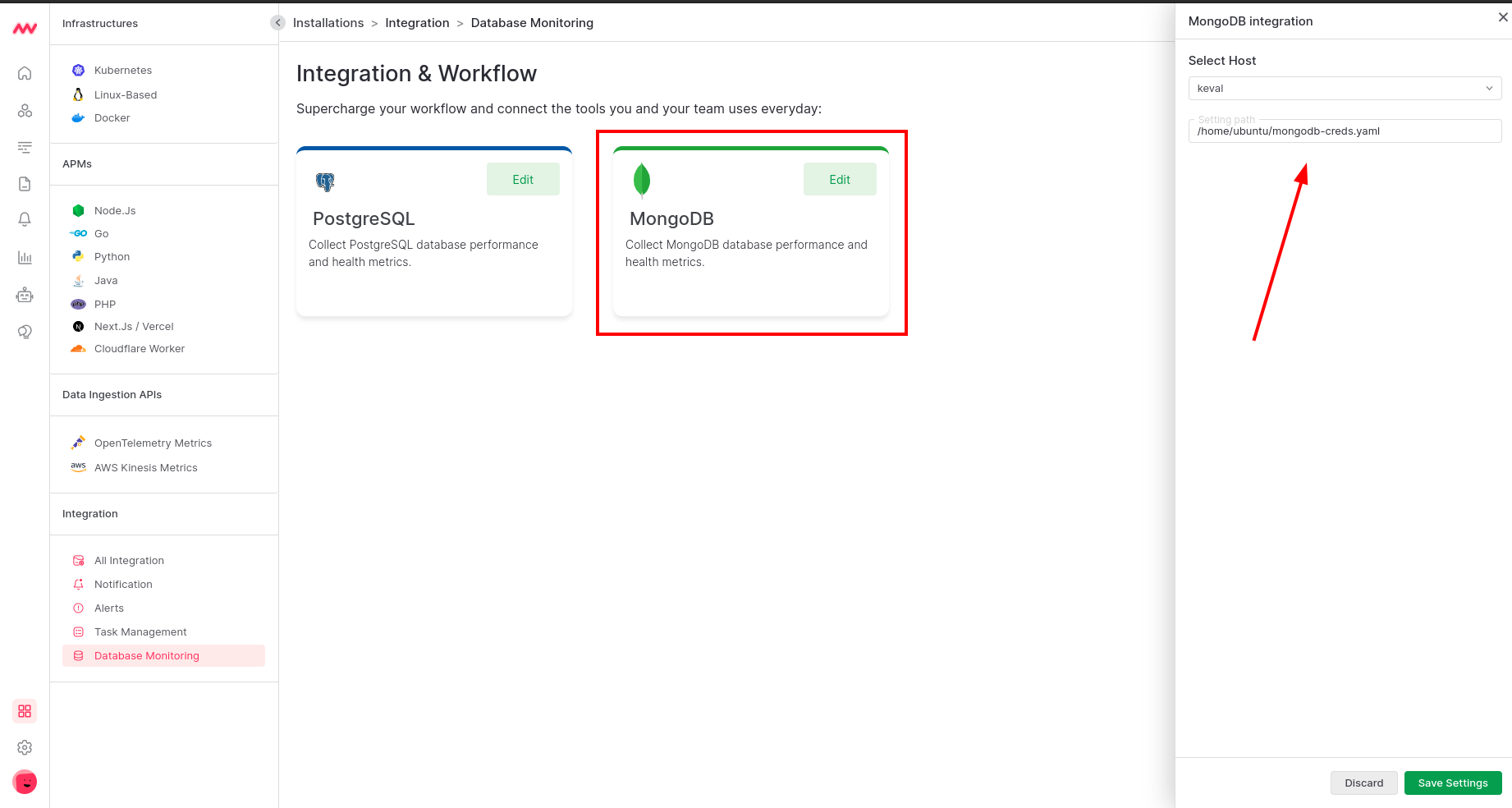
Step 3: Enable Integration
Add a host machine from the dropdown list, input the credential path from Step 1, and SaveVisualize Analytics
Default MongoDB Dashboard
Once the MongoDB integration setup is complete, a new MongoDB-specific dashboard will appear in the Dashboard Builder. This default dashboard serves as a jumping off point for visualizing and analyzing MongoDB data.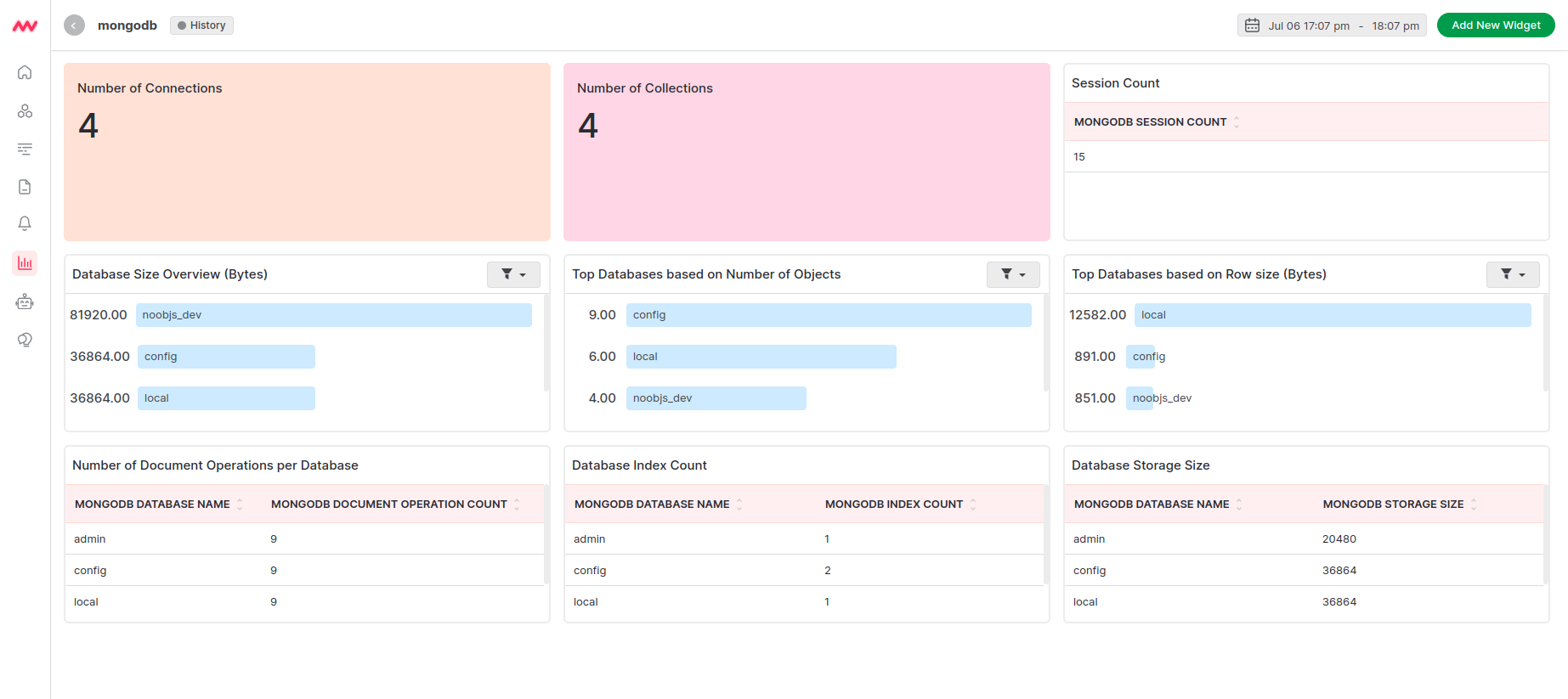
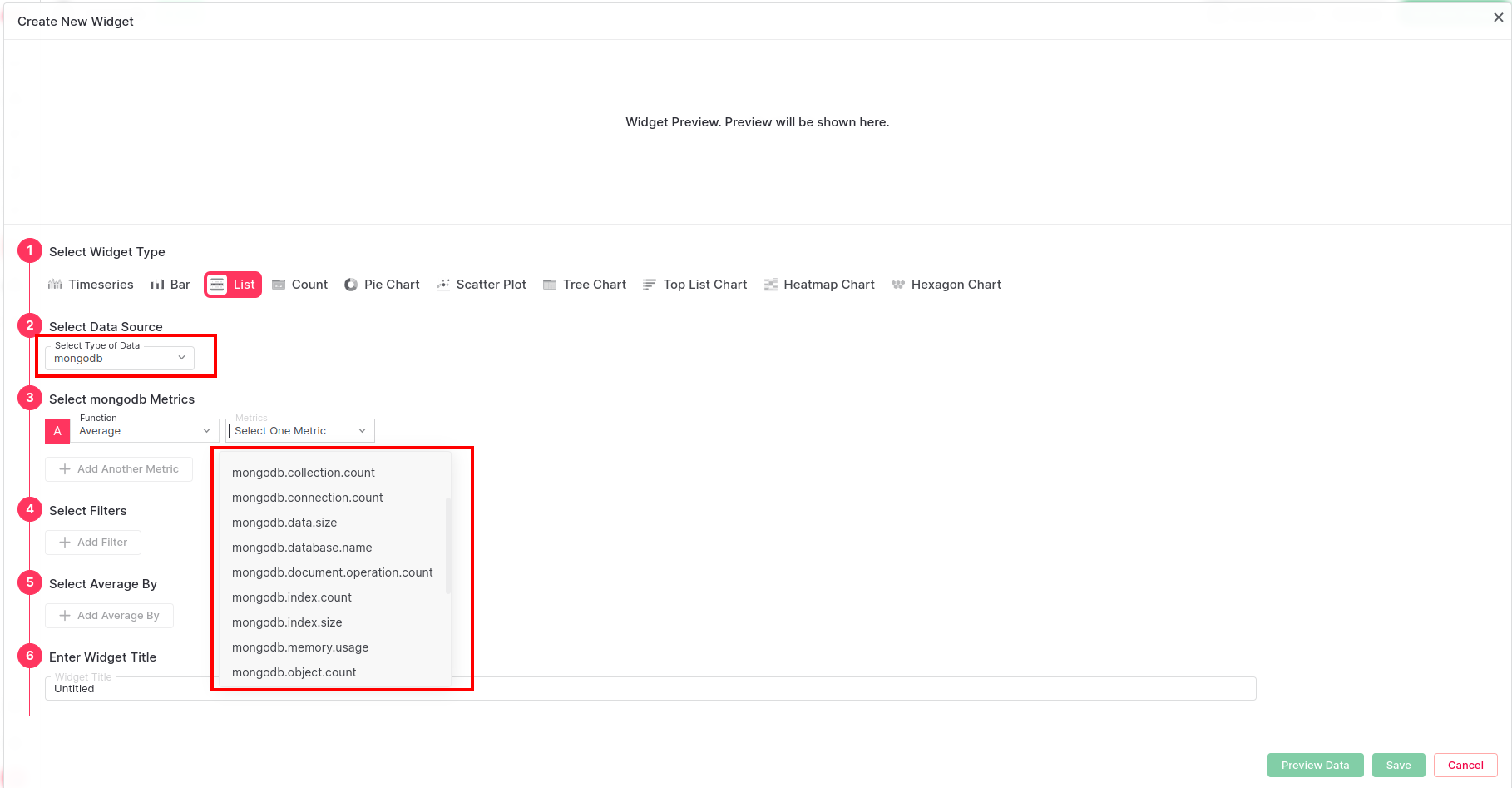
Create MongoDB Widget
MongoDB data can be added to dashboards as a custom widget. When adding a new widget, select themongodb data source to view a full list of available MongoDB data.
Alerts
Alerts can be configured for any MongoDB metrics. When creating a new rule select the Database detection method and MongoDB database type for available metrics to appear in the Metrics dropdown list. Select the desired metric and continue configuring the alert conditions.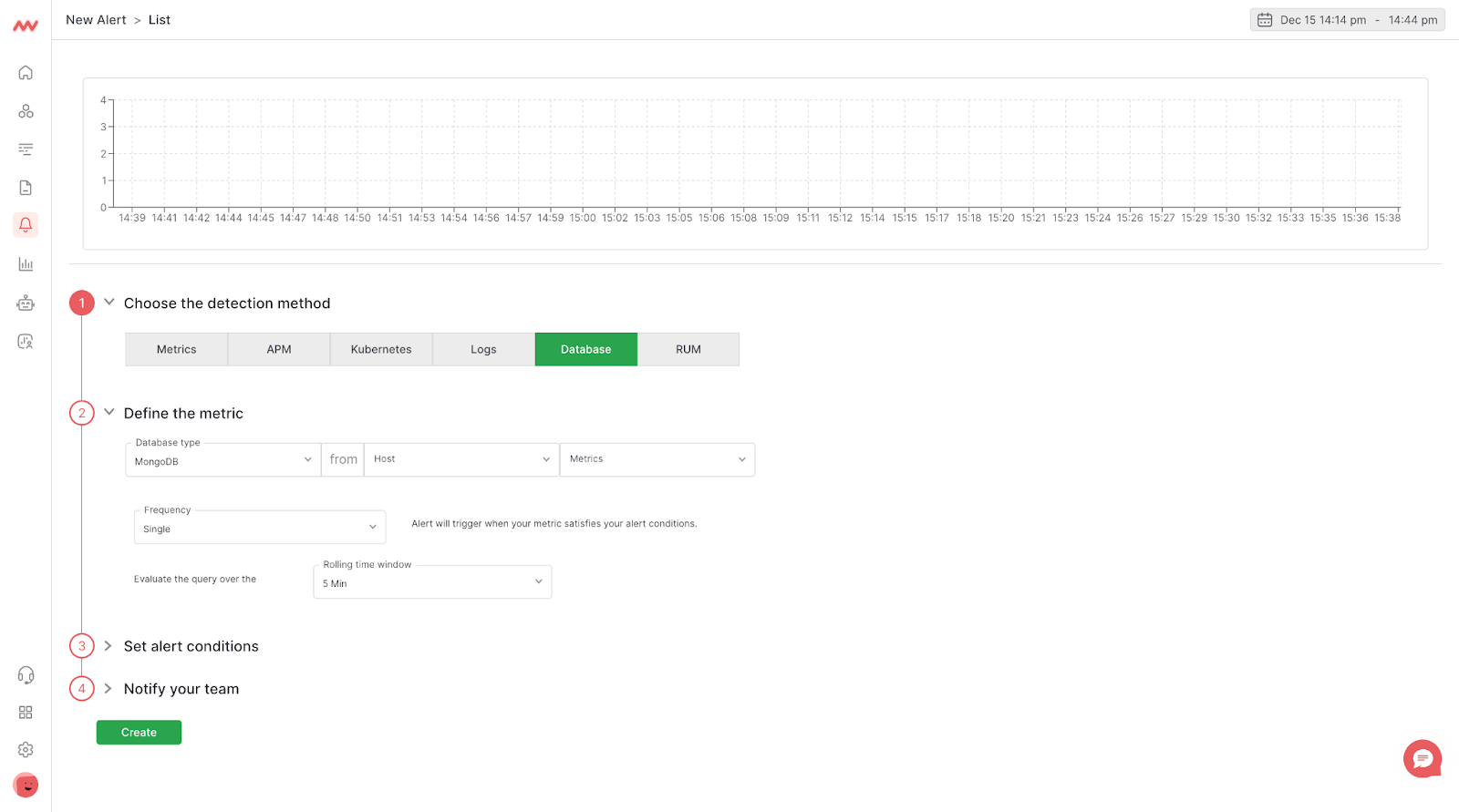
Metrics Collected
Troubleshooting
Next Steps
- How to Create Alerts
- Dashboard Basics & Customization
- Custom Telemetry Ingestion
- Getting Started With Real User Monitoring (RUM)
- Data Ingestion APIs
Need assistance or want to learn more about Middleware? Contact us at support[at]middleware.io.